Article Summary
An education expert from UPM emphasised that teachers must go beyond content delivery and cultivate thinking skills, resilience and self-regulated learning among students. Highlighting challenges such as exam-oriented culture and ineffective technology use, Assoc. Prof. Dr. Siti Salina called for a shift towards holistic education involving teachers, parents and policymakers to better prepare students for future demands.
By: Noor Eszereen Juferi
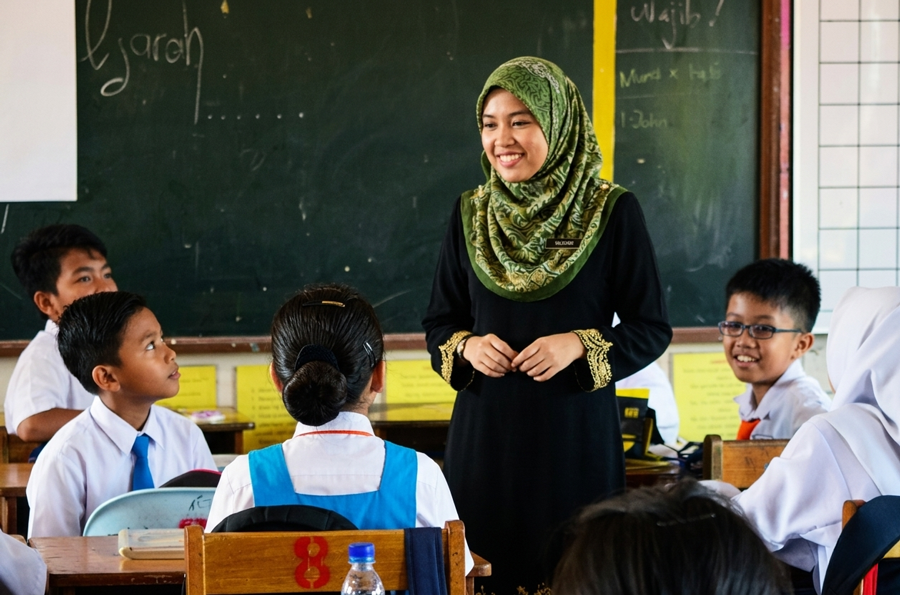
To strengthen the foundation of the nation’s education, teachers must not only master subject content but also possess the ‘soul’ of an educator capable of shaping how students think, learn and adapt to future challenges.
Assoc. Prof. Dr. Siti Salina Mustakim, Senior Lecturer at the Department of Educational Foundations, Faculty of Educational Studies (FPP), UPM, said that today’s education system places too much emphasis on what students know rather than how they learn.
“At the early stages of schooling, the most important skills are not merely reading, writing or arithmetic, but thinking skills and the ability to regulate one’s own learning, or self-regulated learning.
“When students are accustomed to thinking, questioning, and analysing from an early stage, they are better prepared when they enter university, which demands independent learning,” she said.
She added that values such as resilience and curiosity must also be nurtured early, as both determine a student’s ability to endure in an increasingly challenging education system.
“The foundation of education does not rely solely on the syllabus, but more on the learning experiences designed in the classroom. If students are exposed to teacher-centred approaches, they tend to become passive and simply wait for instructions,” she said.
Approaches such as problem-based learning and inquiry-based learning are able to produce students who are more active, courageous in asking questions, and capable of learning independently.
Assoc. Prof. Dr Siti Salina also touched on the reality in Malaysia, which still shows a tendency towards an examination-oriented culture where students are trained to answer questions but are given limited space to think deeply.
“There are still many classrooms oriented towards drill practices, and in such conditions, the space for critical thinking is quite limited,” she said.
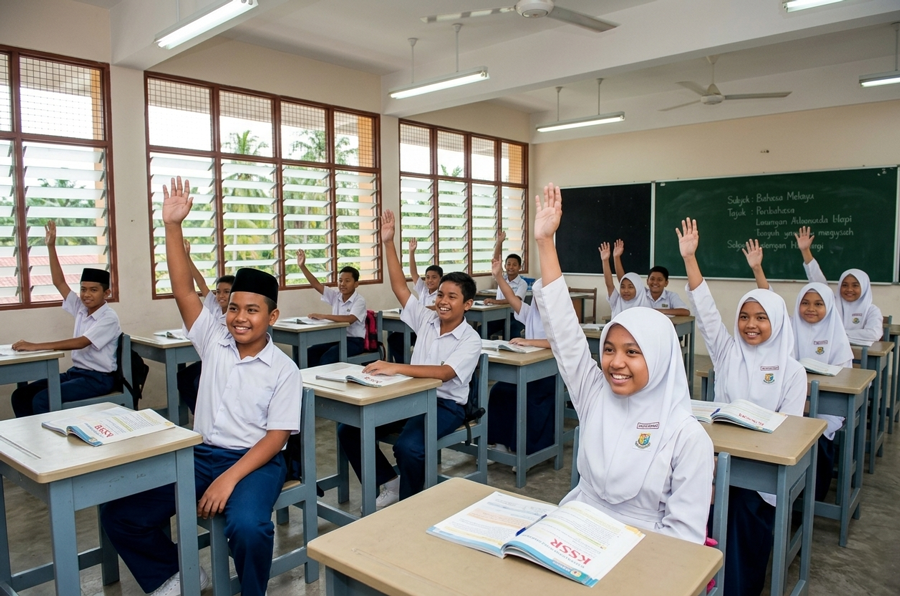
However, changes are beginning to be seen through the implementation of Higher Order Thinking Skills (HOTS) and Classroom-Based Assessment (CBA), although their implementation remains inconsistent.
In the context of modern education influenced by technology, Assoc. Prof. Dr. Siti Salina stressed that technology is not the main solution; rather, how it is used determines the effectiveness of learning.
“The issue is not access to technology, but the extent to which it is used to build students’ thinking and understanding,” she said.
She cited the experience during the COVID-19 pandemic, where the use of technology largely focused on transferring teaching materials into digital formats without changes in pedagogical approaches.
As a result, although technology was used, the way students learned did not change significantly, and they remained passive recipients of information.
Commenting on the main challenges in foundational education, Assoc. Prof. Dr. Siti Salina said the real issue lies not with the students, but with the system and societal mindset.
“There is an imbalance between the aspiration to produce students with 21st-century skills and the reality of a system that still emphasises examination performance. Teachers also often face a dilemma between building students’ understanding and meeting the demands of completing the syllabus,” she said.
In addition, the gap between policy and implementation is also a challenge, as good policies at the national level are not always effectively translated into classroom practice.
At the same time, she emphasised the highly critical role of parents in building the foundation of their children’s education.
Assoc. Prof. Dr. Siti Salina said parents need to shift from a results-oriented approach to one that views education as a process of human development.
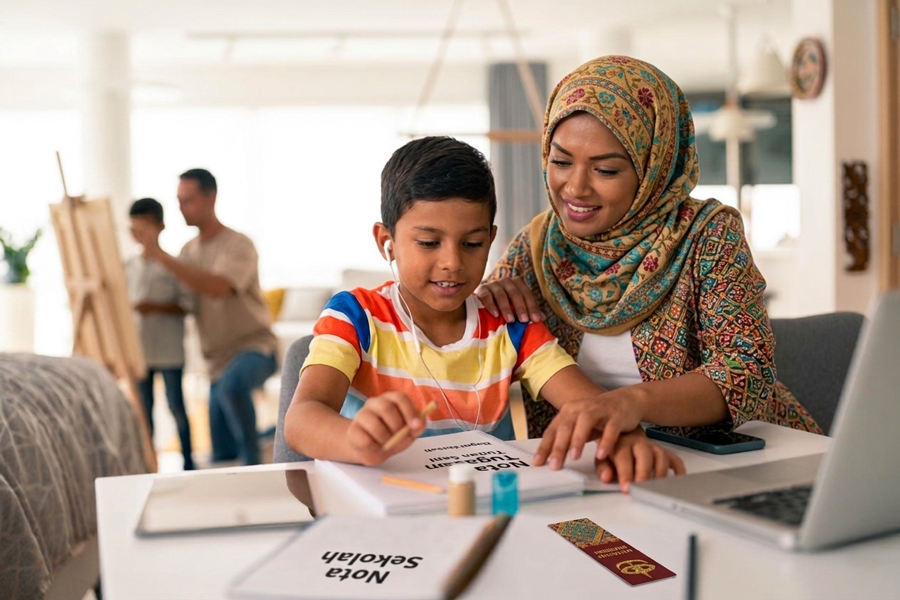
“Meaningful support is not merely ensuring that homework is completed, but providing an environment that encourages children to think, ask questions, and make decisions,” she said.
She also highlighted the phenomenon of parents placing excessive emphasis on tuition and academic achievement, thereby reducing children’s opportunities to explore and learn from mistakes.
“A more holistic approach focused on developing thinking skills can produce a generation that is not only excellent on paper, but also resilient and capable of facing future challenges,” she said.
She called on all parties, including teachers, parents, and policymakers, to shift from producing students who are good at answering questions to producing students who are truly capable of thinking.
“If this foundation is not built early, we will not only fail to prepare students for university, but also for life,” she said.
Date of Input: 24/04/2026 | Updated: 11/05/2026 | hairul_nizam
MEDIA SHARING